
IN PRACTICE
Sustainability in Business - Practical, Digital, Systematic
Sustainable shopping centers are created through the interplay of various areas of action. Renewable energy, biodiversity, reliable ESG data, and systematic sustainability management all contribute to the continuous development of the centers managed by ECE. Seven examples illustrate how sustainability is integrated into operations and portfolio management.
ENERGY EFFICIENCY
Solar Energy on Our Roofs
The use of renewable energy directly at our locations is a key component of more energy-efficient management and the gradual decarbonization of our shopping centers. The use of solar energy has been further expanded with new photovoltaic systems installed on the roofs of the Rhein-Neckar-Zentrum in Viernheim, the Oder-Center in Schwedt, and the Haid Center in Linz. The solar power generated on-site can directly contribute to the centers’ power supply, thereby reducing the amount of electricity purchased from the grid. The Rhein-Neckar-Zentrum Viernheim serves as an example of just how great the potential of existing roof space can be. Approximately 1,726 photovoltaic modules with a total capacity of 742 kWp were installed on two suitable roof areas. The system, which went into operation in 2024, generates approximately 645,000 kWh of electricity per year. This means that, theoretically, about 16 percent of the electricity consumption in common areas can be covered by locally generated solar power, with the potential to reduce grid electricity consumption and, in the long term, energy-related operating costs.
1.726
Installed PV Modules
742
kWp
Rated Power
645.000
kWh
renewable energy per year

GREEN-LEASE TENANT DATA PORTAL
Greater Transparency Through Digital Data Management
With the Green Lease tenant data portal, ECE is digitizing and standardizing the collection of sustainability-related data from its rental partners. The portal is used to collect key information annually on energy consumption, green electricity, LED lighting, and waste disposal. At the same time, tenant partners receive ESG-related information about their properties, such as energy performance certificates, green building certifications, and waste balances.
The rollout has already begun in seven European countries and is being gradually expanded. The structured data collection improves data quality, comparability, and transparency, and creates a solid foundation for ESG assessment and the long-term development of the properties.
7.000
+
Green Lease Agreements with Retailers
7
Countries in Europe are already using it

CONTINUOUSLY BETTER
Sustainability Based on the PDCA Principle
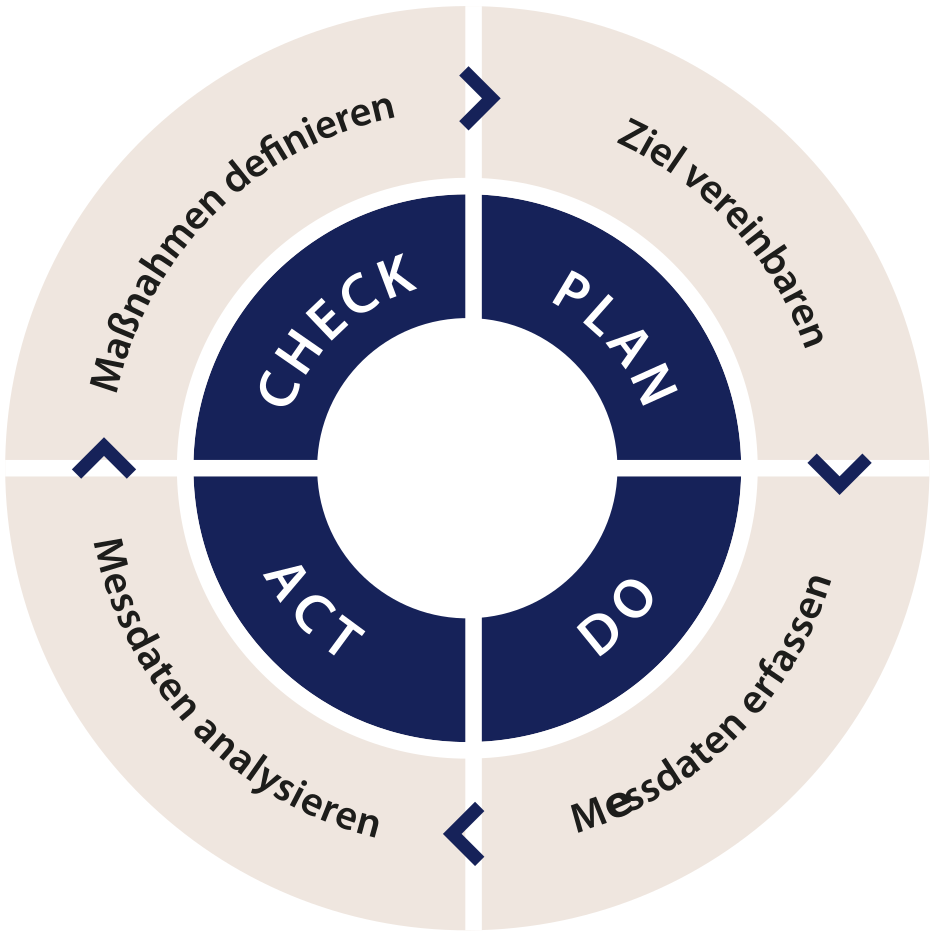
Sustainability in existing buildings requires a systematic process that continuously improves building performance and transparently documents progress. To this end, ECE is establishing a continuous improvement process based on the
Plan-Do-Check-Act (PDCA) principle.
The approach follows a clear cycle: defining goals, implementing measures, verifying their effectiveness, and making adjustments as needed. Key areas of focus include climate protection and energy efficiency, water consumption, materials management, operating costs, and indoor comfort. Regular reviews provide transparency regarding the status of implementation and help identify further opportunities for optimization at an early stage.
For each property, we develop a customized plan with short-, medium-, and long-term measures. Consumption data and other relevant metrics are regularly analyzed and incorporated into the further development of the action plans and climate protection roadmaps. In this way, sustainability in building operations is established as a continuous and measurable improvement process.
ESG SCREENING
The Foundation for the Sustainable Development of Real Estate
Through its ESG screening, ECE offers property owners and investors a solid foundation for the sustainable development of their real estate. This process systematically assesses a property’s ESG maturity level and identifies risks as well as specific opportunities for improvement. Key areas of focus include energy efficiency, CO₂ emissions, climate risks, resource efficiency, mobility, and user comfort, as well as regulatory requirements and sustainability certifications.
Based on operational and consumption data, as well as an assessment of technical systems, ECE develops short-, medium-, and long-term measures. Particular emphasis is placed on reducing energy consumption and greenhouse gas emissions, as well as developing decarbonization pathways.
ESG screening thus supports well-informed investment decisions and the strategic development of real estate. At the same time, it provides a relevant foundation for sustainability reporting and for meeting the requirements of investors and banks.
E-MOBILITY
Expansion of the Charging Infrastructure
By expanding its charging infrastructure, ECE Shopping Centers continues to advance in the field of electric mobility. A current project serves as a prime example of how high-performance charging infrastructure can be integrated into existing properties while taking into account technical, safety-related, and user-oriented requirements.
In May 2026, twelve DC charging points with up to 50 kW and two high-power charging (HPC) points with up to 150 kW of charging power were put into operation at the Rhein-Center in Cologne. In addition to the technical infrastructure, the charging areas were also extensively modified for the integration. This included additional lighting, new parking lot markings, collision and fall protection, and an expansion of the fire alarm system. A signage and wayfinding concept also helps visitors easily navigate the site.
14
DC charging stations in Cologne, including 2 HPC charging stations
150
kW
Charging capacity (approx.)
480
Ø
Charging stations implemented or coordinated by ECE across the entire ECE portfolio


LCA & LCC:
Plan Early to Reduce CO₂ and Costs
ECE integrates life cycle assessments (LCA) and life cycle cost analyses (LCC) early on in the planning of construction and renovation projects. This allows for a transparent comparison of different options in terms of CO₂ impact, embodied energy, and long-term cost-effectiveness.
Particularly in renovation projects, preserving existing building components is a key strategy: it can reduce emissions and energy consumption associated with the production, transport, and installation of new materials. This is supported by standardized specifications, component catalogs, checklists, and demolition and recycling concepts.
A pilot project demonstrates the added value: Early comparison of different design options creates a robust basis for decision-making, revealed potential for reducing environmental impacts and life-cycle costs, and enables sustainability to be specifically integrated into the planning process.
BIODIVERSITY
From Pilot Projects to Strategy
The protection of ecosystems and the promotion of biodiversity are also becoming increasingly important for the sustainable operation of shopping centers. ECE is therefore developing a biodiversity strategy that combines concrete measures in selected centers with the development of an overarching biodiversity transition plan and appropriate performance metrics.
In collaboration with external partners, two centers were assessed for their biodiversity potential, and site-specific measures were identified. These may include nature-based design and greening of areas, new habitats for insects, birds, and plants, as well as potential improvements to the microclimate, air quality, and stormwater retention. The insights gained are intended to serve as a blueprint for other centers.
At the same time, ECE is participating in the Initiative for Nature-Aligned Transition (INAT). Through dialogue with companies and other stakeholders, the foundations for a biodiversity transition plan and meaningful KPIs are being developed. This will enable biodiversity measures to be systematically evaluated, further developed, and rolled out to other centers in the future.